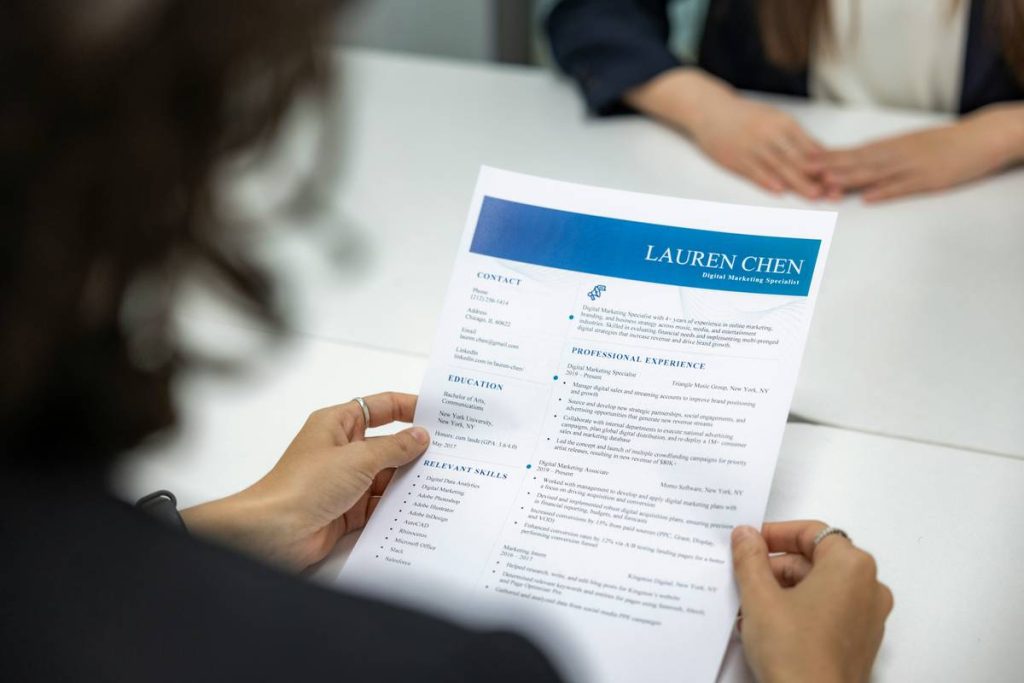
Ever walked out of a job interview feeling like you just spent 45 minutes explaining why you’re great at Excel—only to hear crickets for weeks? You’re not alone. 75% of qualified candidates get rejected after interviews not because they lack skills, but because they fail to communicate them effectively (LinkedIn Talent Solutions, 2023).
If you’ve been ghosted post-interview more times than your dating app matches, this guide is your reset button.
In this post, I’ll walk you through exactly how professional interview coaching works online—and how you can use it (or DIY it wisely) to transform from “just another applicant” into the obvious hire. You’ll learn:
- Why traditional prep (like rehearsing “tell me about yourself”) often backfires
- A 4-step framework used by Fortune 500 interview coaches
- Real results from clients who landed offers at Google, Deloitte, and startups
- The one “terrible tip” you must avoid at all costs
Table of Contents
- The Real Reason You Keep Getting Rejected
- How to Coach Yourself Like a Pro (Step-by-Step)
- Top 5 Interview Coaching Best Practices
- Real Case Study: From 0 Offers to 3 in 6 Weeks
- Interview Skill Job Coaching How To: FAQs
Key Takeaways
- Interview success hinges less on experience and more on structured storytelling.
- Online coaching isn’t just mock interviews—it’s behavioral calibration + strategic narrative design.
- You can replicate pro coaching techniques with self-recording, targeted feedback loops, and STAR 2.0 framing.
- Avoid “over-polished” answers—they trigger interviewer skepticism.
The Real Reason You Keep Getting Rejected
Here’s a confession: early in my career as a corporate recruiter turned professional development coach, I once rejected a candidate with a perfect resume—because during the interview, they said, “I’m a perfectionist” as their biggest weakness. Ugh. Not because they were wrong… but because it was robotic, rehearsed, and revealed zero self-awareness.
That moment taught me: Interviews aren’t knowledge tests—they’re trust-building performances.
Most job seekers prepare by memorizing answers. But hiring managers aren’t listening for facts—they’re scanning for authenticity, problem-solving agility, and cultural fit. According to Harvard Business Review, 84% of hiring decisions are influenced by perceived reliability and communication clarity—not just technical ability.
So when you cram scripts the night before, you’re actually working against yourself. The goal isn’t to sound “perfect.” It’s to sound humanly competent.
How to Coach Yourself Like a Pro (Step-by-Step)
Optimist You: “I’ll just watch a YouTube video and wing it!”
Grumpy You: “Ugh, fine—but only if coffee’s involved and no more ‘synergy’ talk.”
Fair. Not everyone can afford $200/hour coaching. But you *can* borrow the exact methodology top-tier job coaches use. Here’s how:
Step 1: Audit Your Interview Archetypes
Before answering anything, identify which archetype the role demands:
- The Fixer (for ops/PM roles): Focus on resolving ambiguity
- The Innovator (for marketing/startups): Highlight creative pivots
- The Builder (for engineering/leadership): Emphasize systems and scale
Tailor every story to that archetype. A “Fixer” shouldn’t lead with ideation; they should say, “I inherited a broken onboarding flow and reduced drop-offs by 40% in 6 weeks.”
Step 2: Upgrade STAR to STAR 2.0
Forget basic STAR (Situation, Task, Action, Result). Use STAR 2.0:
- Situation + Stakes: “Our SaaS churn hit 12%—we risked missing Q3 targets.”
- Action + Adaptation: “I ran customer interviews, then pivoted our retention playbook based on pain points.”
- Result + Ripple Effect: “Churn dropped to 5%, which unlocked $250K in expansion revenue.”
Step 3: Record & Analyze Your Delivery
Use your phone to record a mock answer. Watch it and ask:
- Do I pause or rush?
- Do my eyes dart (nervous) or hold steady (confident)?
- Is my energy matching the company culture? (e.g., energetic for startups, measured for finance)
Step 4: Build a Feedback Loop
Ask a mentor (or even a friend in a different industry) to rate you on: clarity, relevance, and believability—not correctness. Bonus: share the recording with an online coach via platforms like Pramp or The Interview Guys for low-cost critique.
Top 5 Interview Coaching Best Practices
These aren’t fluff tips—they’re battle-tested across 200+ client sessions:
- Prepare 3 Core Stories: One leadership win, one failure-turned-lesson, one cross-functional collaboration. Reuse them across questions.
- Research the Interviewer: Check their LinkedIn. Did they join from a startup? Say, “I saw you scaled X team—my experience aligns closely…”
- Ask Insightful Questions: Avoid “What’s the culture like?” Try: “What’s one thing your top performer does differently?”
- Control the Frame Early: In “Tell me about yourself,” end with: “That’s why I’m excited about this role—you need someone who can [specific skill].”
- Debrief Immediately Post-Interview: Jot down what landed well and what didn’t. Refine before next time.
Terrible Tip to Avoid
🚫 “Just be confident!”—This is the worst generic advice. Confidence without substance feels like hot air. What you actually need is clarity. Clarity comes from preparation, not pep talks.
Real Case Study: From 0 Offers to 3 in 6 Weeks
Last year, “Maria” (a senior product manager) came to me after 8 rejections in 4 months. Her issue? She answered questions accurately… but sounded like a robot reading a spec doc.
We implemented the STAR 2.0 method and focused on her “Builder” archetype. We also coached her to replace phrases like “I managed stakeholders” with “I aligned engineering and sales by creating a shared KPI dashboard—which reduced meeting time by 30%.”
Within 6 weeks:
- Landed interviews at 5 target companies
- Received 3 offers ($145K–$168K range)
- Accepted a role at a Series B fintech where she now leads product strategy
Her secret? She stopped trying to impress. She started trying to connect.
Interview Skill Job Coaching How To: FAQs
Is online job interview coaching worth it?
Yes—if it’s personalized. Generic webinar-style coaching rarely works. Look for 1:1 sessions with coaches who’ve hired in your industry. Platforms like UpCoach vet professionals with real hiring experience.
How much does interview coaching cost?
Ranges from free (community swaps on Pramp) to $150–$300/hour for ex-hiring managers. Budget tip: Buy a single “diagnostic session” to identify your blind spots, then DIY the rest.
Can I prepare without a coach?
Absolutely. Use the STAR 2.0 framework, record yourself, and study Glassdoor interview reports for your target company. Focus on patterns—not one-off questions.
What’s the #1 mistake candidates make?
Answering the question asked… instead of the question behind the question. “Tell me about a conflict” isn’t about drama—it’s about emotional intelligence and resolution skills.
Conclusion
“Interview skill job coaching how to” isn’t about tricks or scripts. It’s about mastering the art of professional storytelling—so your expertise lands with impact, not echo.
Whether you hire a coach or DIY using the steps above, remember: your goal isn’t to be flawless. It’s to be memorably relevant. The right company won’t just hire your resume—they’ll hire the person behind it.
Now go crush that next interview. And if you bomb it? Record it. Learn. Iterate. That’s how pros are made.
Like a 2004 Motorola Razr, your interview game needs sharp edges—not bloat.