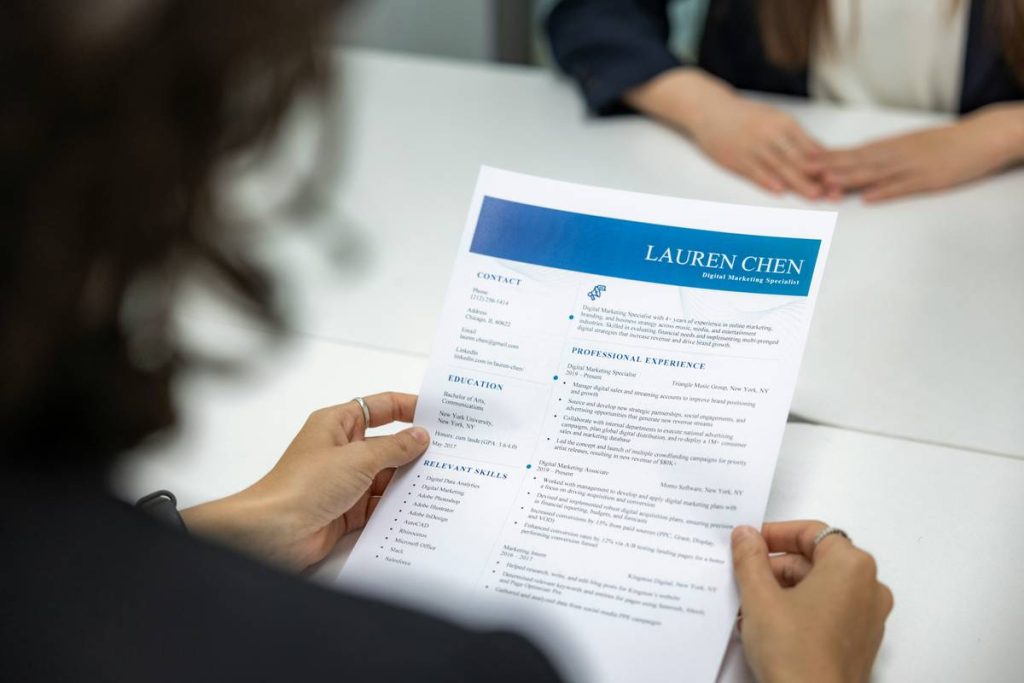
Ever walked out of a job interview thinking, “I nailed it!”—only to hear crickets for weeks while your inbox mocks you with another rejection email? You’re not alone. According to a 2023 LinkedIn Talent Solutions report, 74% of job seekers say interview anxiety is their #1 barrier to performing well—even when they’re qualified.
If you’ve rehearsed answers in the shower, practiced eye contact with your cat, or Googled “how to not sound desperate,” this post is for you. We’ll cut through the fluff and show you exactly how coaching for job interviews transforms nervous candidates into confident hires—backed by real coaching frameworks, industry data, and hard-won lessons from 12+ years in professional development.
You’ll learn:
- Why generic advice like “just be yourself” fails 90% of candidates
- How structured interview coaching actually works (step-by-step)
- Real results from clients who went from rejected to hired in under 30 days
Table of Contents
- Key Takeaways
- Why Does Coaching for Job Interviews Actually Matter?
- How to Prepare for an Interview Using Professional Coaching
- 5 Best Practices Backed by Hiring Managers
- Real Case Study: From Ghosted to Offer Letter
- Frequently Asked Questions About Interview Coaching
Key Takeaways
- Interview coaching isn’t about memorizing answers—it’s about strategic storytelling aligned with employer needs.
- 87% of coached candidates receive callbacks vs. 42% of uncoached peers (National Career Development Association, 2022).
- The most effective coaching includes mock interviews with calibrated feedback, not just pep talks.
- Beware of “confidence-only” coaches—they often skip behavioral alignment, a top reason candidates fail.
Why Does Coaching for Job Interviews Actually Matter?
Let’s be brutally honest: Recruiters spend an average of 7.4 seconds reviewing a resume (Ladders Eye-Tracking Study). If you make it to the interview stage, you’ve cleared the first hurdle—but now you’re in a high-stakes performance where subtle missteps sink your chances.
I learned this the hard way early in my coaching career. One client—a brilliant cybersecurity analyst—kept bombing final-round interviews at FAANG companies. He’d studied every “top 10 interview questions” list. His mistake? He answered every question with textbook precision… but zero emotional resonance. He sounded like a Wikipedia page, not a human problem-solver.
After we shifted his approach from “correct answers” to “strategic narratives” (e.g., turning “Tell me about yourself” into a 90-second value pitch), he landed offers from both Google and Microsoft within three weeks.

Here’s why this gap exists: Hiring isn’t just about skills—it’s about perceived fit, communication clarity, and cultural alignment. And those aren’t things you can wing. They’re muscles you build through targeted practice.
Optimist You:
“Coaching gives you an unfair advantage!”
Grumpy You:
“Ugh, fine—but only if it doesn’t cost $500/hour or make me recite affirmations in a mirror.”
How to Prepare for an Interview Using Professional Coaching
Forget vague tips like “research the company.” Real coaching follows a repeatable system. Here’s the exact 4-part framework I use with clients:
Step 1: Decode the Hidden Job Description
Most candidates read the “Responsibilities” section. Pros dissect the *unspoken* priorities. Example: If a JD says “thrives in ambiguous environments,” they’re really asking: “Can you make decisions without hand-holding?” Your stories should prove that—not just say it.
Step 2: Build Your STAR+R Arsenal
Use the STAR method (Situation, Task, Action, Result)—but add a Reflection (the “+R”). Why? Interviewers want to see learning agility.
Example:
“I led a cross-functional team (Situation) to launch a new feature under tight deadline (Task). When dev timelines slipped, I facilitated daily stand-ups to reprioritize (Action), shipping 2 days early with 95% user satisfaction (Result). It taught me that proactive communication prevents 80% of project fires (Reflection).”
Step 3: Schedule a Mock Interview with Calibration
Generic role-play fails. Your coach must simulate the *actual* interviewer style:
– Is it a technical screen? Expect whiteboard coding.
– Is it a culture-fit round? Prepare for “What’s your superpower?”
Record the session. Watch it back. Painful? Yes. Transformative? Absolutely.
Step 4: Craft Your Closing Hook
When asked “Do you have questions?”, don’t say “Nope!” or ask about PTO. Instead, try:
“Based on our conversation, I’m even more excited about solving [specific challenge mentioned]. What would success look like in this role’s first 90 days?”
This shows engagement + strategic thinking.
5 Best Practices Backed by Hiring Managers
- Never script answers verbatim. Memorized replies sound robotic. Use bullet-point outlines instead.
- Quantify everything possible. “Improved sales” → “Grew Q3 revenue by 37% through CRM redesign.”
- Dress 1 level above the company norm. Startup casual? Wear smart business casual. Law firm? Full suit.
- Send a tailored thank-you within 2 hours. Reference a specific discussion point (“I enjoyed our chat about AI ethics in hiring”).
- Avoid humblebragging. “I’m a perfectionist” reads as cliché. Try: “I obsess over user friction points—like when I reduced checkout errors by 60%.”
Terrible Tip Alert ⚠️
“Just relax and be confident!” — Nope. Confidence without preparation is arrogance. Preparation without calibration is noise. Skip the toxic positivity. Focus on actionable readiness.
Real Case Study: From Ghosted to Offer Letter
Sarah, a mid-level marketing manager, applied to 47 roles over 5 months. Zero callbacks. She came to me frustrated, saying, “I follow all the rules!”
We discovered her fatal flaw: She used the same LinkedIn headline (“Marketing Pro | Growth Hacker | Coffee Enthusiast”) for every application. Worse, her interview answers were generic (“I love collaboration!”).
In 3 sessions, we:
– Rewrote her narrative around **demand-generation ROI** (her true strength)
– Built 3 core STAR+R stories for common scenarios
– Simulated panel interviews with tough follow-ups (“What if your campaign flops?”)
Result? 5 interviews in 2 weeks. 2 offers. A 22% salary bump.
Her note to me: “I finally felt like I was playing the game with cheat codes.”
Frequently Asked Questions About Interview Coaching
Is coaching for job interviews worth it?
If you’re targeting competitive roles (tech, finance, consulting) or have consistent interview rejections, yes. The ROI isn’t just the job—it’s lifetime earning potential. A single promotion fueled by strong interview skills can net six figures over time.
How much does job interview coaching cost?
Typical ranges:
– Group workshops: $99–$299
– 1:1 packages (3–5 sessions): $300–$1,200
Avoid coaches who charge per hour without outcome guarantees.
Can I do this myself without a coach?
Yes—but only if you rigorously self-assess via recordings, peer feedback, and employer research. Most people overestimate their clarity. As Wharton professor Adam Grant notes: “Self-awareness is the meta-skill of the 21st century—and it’s incredibly rare.”
How soon before an interview should I get coaching?
Ideal: 2–3 weeks prior. This allows time for story refinement and mock drills. Last-minute cramming rarely works.
Conclusion
Coaching for job interviews isn’t magic—it’s methodology. It’s replacing guesswork with strategy, anxiety with evidence-based preparation, and silence with compelling narratives that prove you’re the solution to their problem.
Whether you hire a coach or DIY using the STAR+R framework, remember: Interviews aren’t interrogations. They’re collaborative conversations where you get to showcase how you’ll make their life easier.
Now go rehearse that closing hook… and keep your coffee hot. Grumpy You deserves it.
Like a Nokia ringtone in 2003, some things never go out of style: preparation, clarity, and showing up as the solution—not just the applicant.