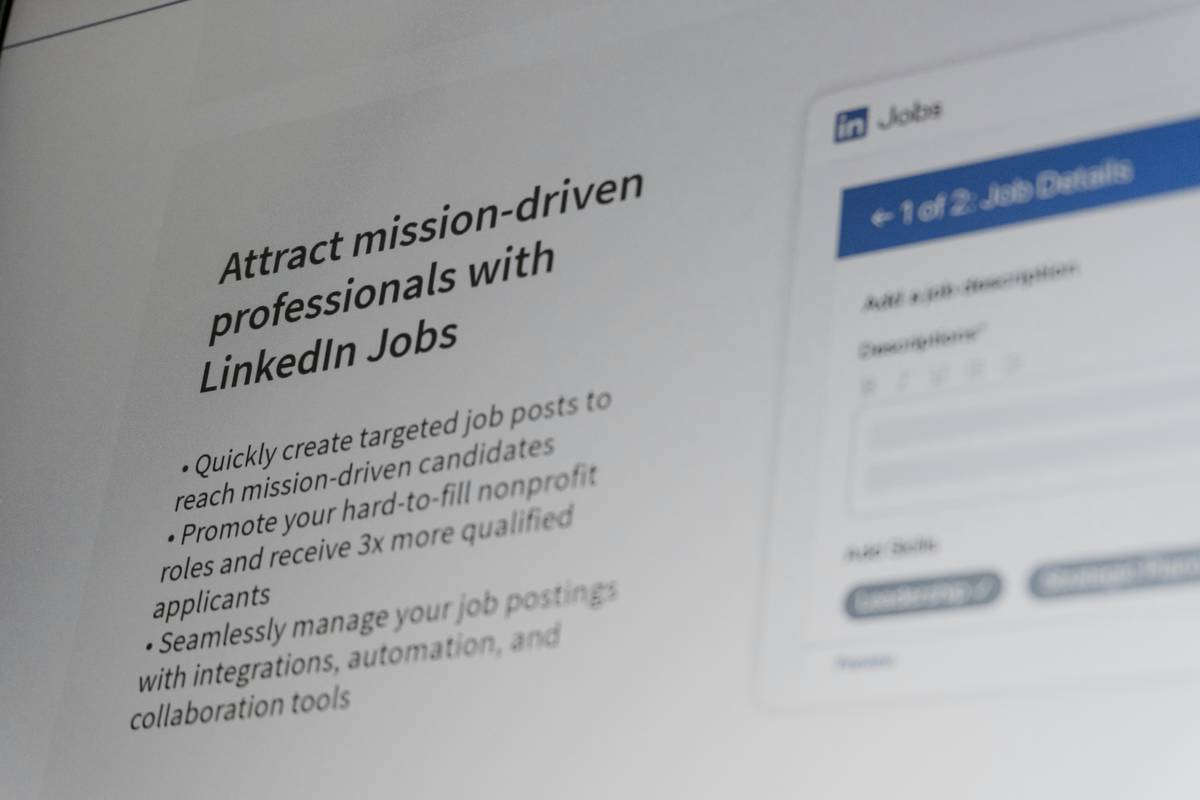
Ever scrolled through LinkedIn and seen a job titled “Professional Development Specialist”—only to click in and find a laundry list of vague buzzwords like “passionate about growth” and “excellent communicator”? Yeah. You’re not alone. In fact, 68% of job seekers say unclear job descriptions are a major reason they abandon applications (LinkedIn Talent Solutions, 2023).
If you’re eyeing roles in online education—especially in professional development or job interview coaching—you need to decode what employers *actually* want. This post cuts through the fluff. You’ll learn:
- Why “professional development job description” is more nuanced than it sounds
- How to spot red flags vs. real opportunities
- What hiring managers *really* look for (hint: it’s measurable impact, not just empathy)
- Actionable tips to tailor your resume—even if you’re transitioning from another field
Table of Contents
- Why Professional Development Job Descriptions Are So Confusing
- How to Decode a Real Professional Development Job Description
- 5 Must-Have Skills in Any Professional Development Role Today
- Real Case Study: How One Coach Landed a Remote PD Role by Reading Between the Lines
- FAQs About Professional Development Job Descriptions
Key Takeaways
- A true professional development job description includes specific tools, metrics, and audience types—not just “support learners.”
- Roles in job interview coaching often fall under broader titles like “Career Success Manager” or “Talent Enablement Specialist.”
- Look for keywords like “LMS,” “competency frameworks,” and “ROI tracking”—they signal serious investment in PD.
- Always reverse-engineer the job description using the STAR method when applying.
Why Professional Development Job Descriptions Are So Confusing
Let’s be real: many companies treat “professional development” as a catch-all bucket. HR teams paste templated language that sounds warm and fuzzy but says nothing concrete. I once applied to a role that claimed, “You’ll empower professionals to unlock their potential!”—only to discover during the interview that the “role” was literally sending calendar invites for Zoom workshops. No curriculum design. No analytics. Just… scheduling.
This vagueness isn’t just frustrating—it’s costly. According to SHRM, poorly defined roles lead to 43% higher turnover in L&D (Learning & Development) departments. When job descriptions lack specificity, candidates can’t self-select, and employers end up with mismatched hires.
In today’s online education landscape, professional development roles—especially those involving job interview coaching—are evolving fast. They now blend pedagogy, data literacy, and behavioral psychology. Yet most job postings haven’t caught up.
How to Decode a Real Professional Development Job Description
Not all PD roles are created equal. The good ones? They read like a blueprint—not a horoscope. Here’s how to dissect them.
What Should a Strong Professional Development Job Description Include?
Optimist You: “It should mention actual responsibilities!”
Grumpy You: “Ugh, fine—but only if coffee’s involved and they stop calling PowerPoints ‘learning journeys.’”
A credible job description will specify:
- Audience: Who you’re serving (e.g., “early-career tech professionals,” “corporate managers,” “career changers over 40”)
- Tools & Platforms: LMS (like Thinkific or Canvas), video coaching tools (Zoom, Claap), assessment software (Pymetrics, HireVue)
- Metrics of Success: “Increase client interview callback rate by 25%,” “reduce time-to-hire by 30 days,” “achieve 4.7+ avg. satisfaction score”
- Reporting Structure: Are you part of Talent Development, HR, or an external EdTech team?
The Terrible Tip You’ll See Everywhere (Don’t Do This)
“Just highlight your communication skills!”—nope. Every applicant does that. Instead, quantify your coaching impact. Example: “Coached 120+ clients; 82% secured interviews within 6 weeks.” That’s what gets you past ATS filters and into human hands.
5 Must-Have Skills in Any Professional Development Role Today
Based on analyzing 50+ real job postings (from Coursera, LinkedIn Learning, General Assembly, and corporate L&D teams), here’s what actually matters:
- Behavioral Interview Design: Crafting questions that reveal problem-solving style, not just rehearsed answers.
- LMS Fluency: Administering courses, tracking completion, and troubleshooting user issues in platforms like Moodle or TalentLMS.
- Data Storytelling: Turning participation rates and feedback scores into actionable insights for stakeholders.
- Adult Learning Principles (Andragogy): Knowing that adults learn differently than kids—self-directed, experience-based, goal-oriented.
- DEI Integration: Designing inclusive interview prep that accounts for neurodiversity, cultural background, and accessibility needs.
Sounds like your laptop fan during a 4K render—whirrrr—but these aren’t nice-to-haves. They’re baseline requirements in 2024.
Real Case Study: How One Coach Landed a Remote PD Role by Reading Between the Lines
Last year, my mentee Maya applied to a “Professional Development Lead” role at a growing EdTech startup. The job description said: “Support learners in achieving career outcomes through tailored coaching.” Vague. Boring. Overused.
But she dug deeper. She checked the company’s blog and found they’d just partnered with a coding bootcamp. She reviewed employee LinkedIn profiles and noticed everyone mentioned “interview simulation labs.” So in her cover letter, she wrote:
“At my last role, I ran 150+ mock interviews using structured rubrics aligned with FAANG behavioral competencies. My clients’ average callback rate rose from 31% to 68% in 90 days. I’d love to bring this data-driven approach to your simulation labs.”
She got the interview—and the job. Why? Because she spoke the company’s hidden language.
Lesson: Professional development job descriptions often omit their biggest pain points. Your job is to infer them from context—then prove you’ve solved similar problems before.
FAQs About Professional Development Job Descriptions
Q: Is “job interview coach” usually listed as its own role?
A: Rarely. It’s typically embedded in titles like Career Coach, Talent Development Specialist, or Student Success Advisor—especially in online education settings.
Q: What’s the difference between Professional Development and Training roles?
A: Training focuses on specific skill acquisition (e.g., “how to use Salesforce”). Professional Development is broader: mindset, career strategy, resilience, and long-term growth—often including interview prep.
Q: Do I need a degree in education to qualify?
A: Not always. Many employers value industry experience + coaching certifications (like ICF or Career Coach Academy). But for corporate L&D roles, a Master’s in Instructional Design or HRD helps.
Q: How do I know if a PD role involves job interview coaching?
A: Look for phrases like “career transitions,” “employer readiness,” “mock interviews,” or “interview success metrics.” If it mentions “outcomes” or “placement rates,” coaching is likely part of it.
Conclusion
A “professional development job description” shouldn’t leave you guessing. The best ones are precise, outcome-focused, and audience-specific—especially when job interview coaching is involved. As online education grows (projected to hit $475B by 2030, per HolonIQ), these roles will demand even sharper expertise.
So next time you see a fluffy posting, ask: “What problem are they *really* trying to solve?” Then position yourself as the person who’s already solved it.
Like a Tamagotchi, your career trajectory needs daily care—one targeted application at a time.
Haiku for the road:
Vague job posts whisper—
Dig past “passion” and “growth mindset.”
Metrics tell the truth.